
The Global status report on alcohol and health and treatment of substance use disorders presents a comprehensive overview of alcohol consumption, alcohol-related harm and policy responses as well as treatment capacities for alcohol and drug use disorders worldwide. The report is based on data collected by WHO from Member States and organized in accordance with the Sustainable Development Goals health target 3.5 which calls on countries to strengthen “the prevention and treatment of substance abuse, including narcotic drug abuse and harmful use of alcohol”.
Health consequences of alcohol consumption
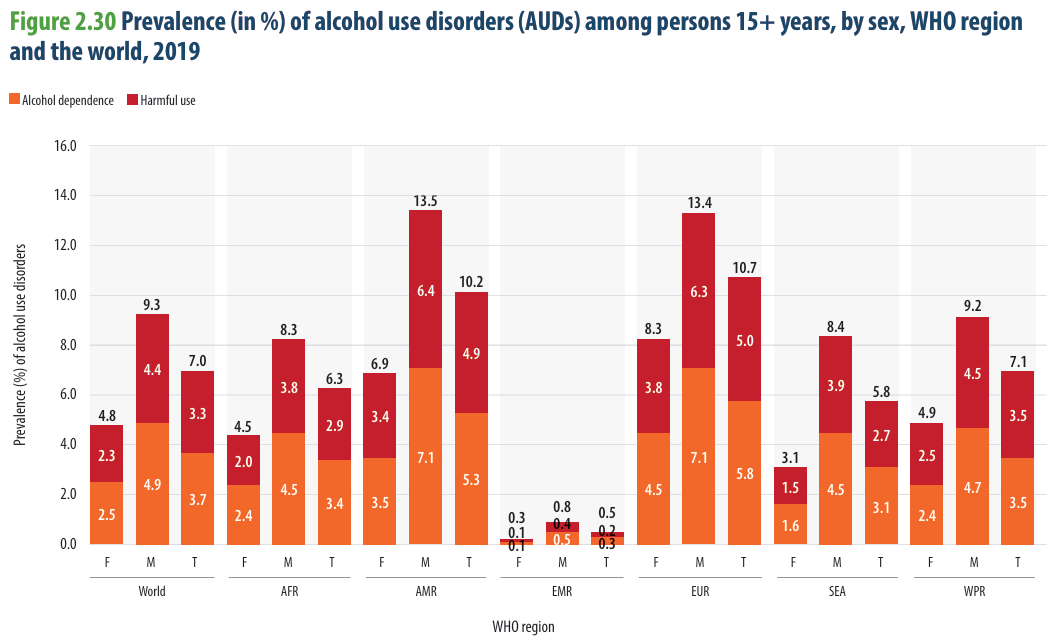
In 2019, an estimated 400 million people aged 15 years and older had an AUD (representing 7.0% of adults), and 209 million people aged 15 years and older lived with alcohol dependence (representing 3.7% of all people aged 15+ years). The past 12-month prevalence of AUDs and alcohol dependence varied globally (see Figure 2.29) and by WHO region, with the prevalence of AUDs being highest in the European Region (10.7% of people aged 15+ years) and in the Region of the Americas (10.2%), and the prevalence of AUDs being lowest in the Eastern Mediterranean Region (0.5% of people aged 15+ years). Prevalence of alcohol dependence also varied by WHO region, being most prevalent in the European Region (5.8%) and the Region of the Americas (5.3%), and least prevalent in the Eastern Mediterranean Region (0.3%).
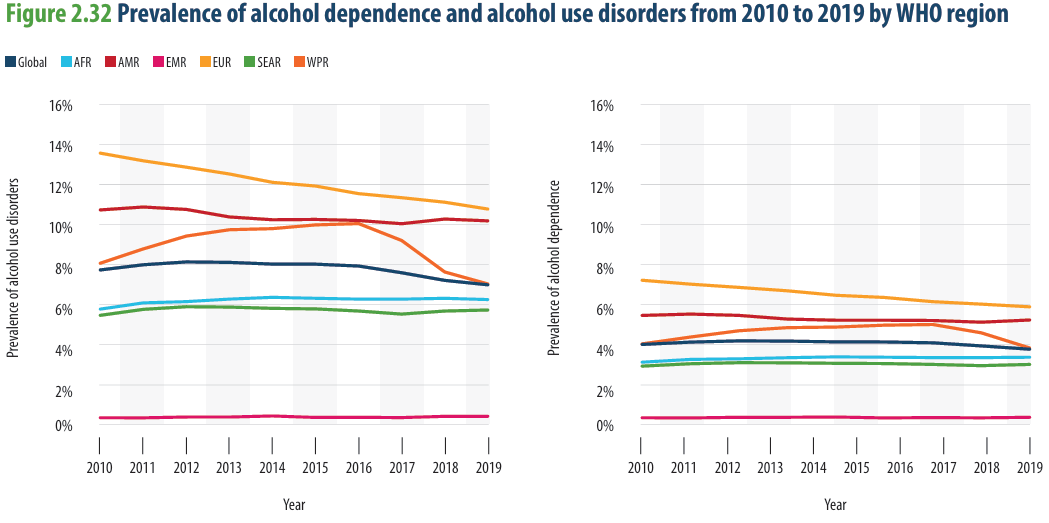
The prevalence of AUDs decreased from 7.8% in 2010 to 7.0% in 2019, and the prevalence of alcohol dependence decreased from 4.1% in 2010 to 3.7% in 2019. The prevalence of AUDs increased in the African Region (8.8% relative increase), Eastern Mediterranean Region (6.9% relative increase) and the South-East Asia Region (5.3% relative increase). Conversely, from 2010 to 2019 the prevalence of AUDs decreased in the Region of the Americas (5.3% relative decrease), the European Region (20.6% relative decrease) and the Western Pacific Region (12.8% relative decrease) .
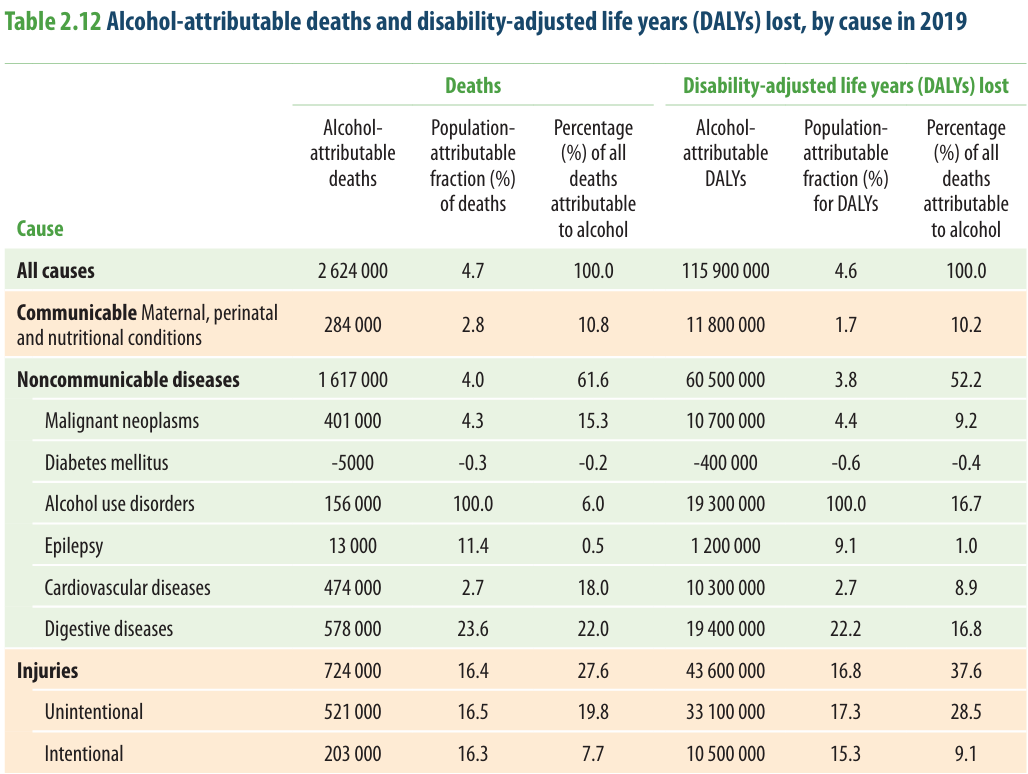
Alcohol consumption resulted in an estimated 2.6 million deaths (4.7% of all deaths) and 115.9 million DALYs (4.6% of all DALYs) in 2019, largely due to noncommunicable diseases, injuries and mental health conditions.
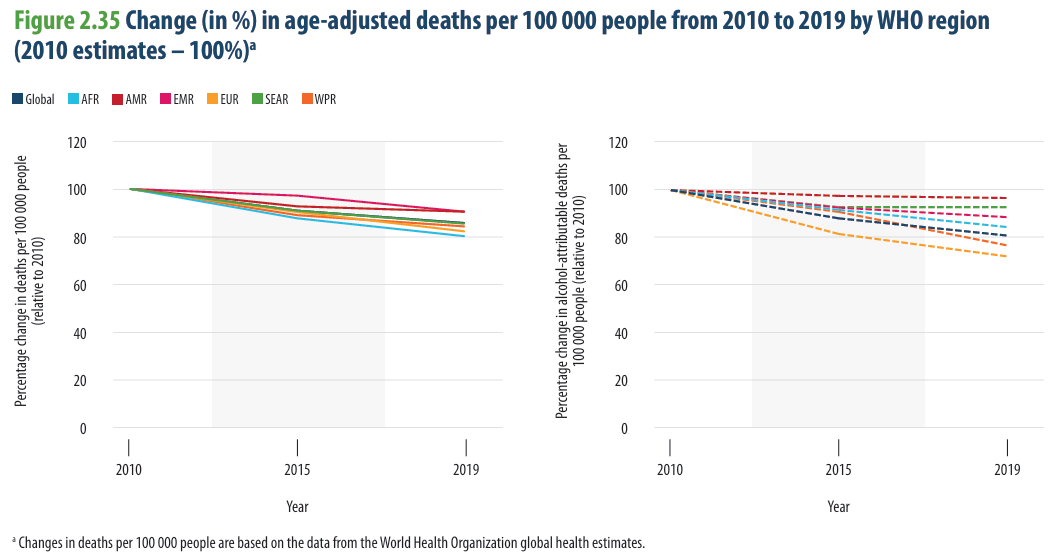
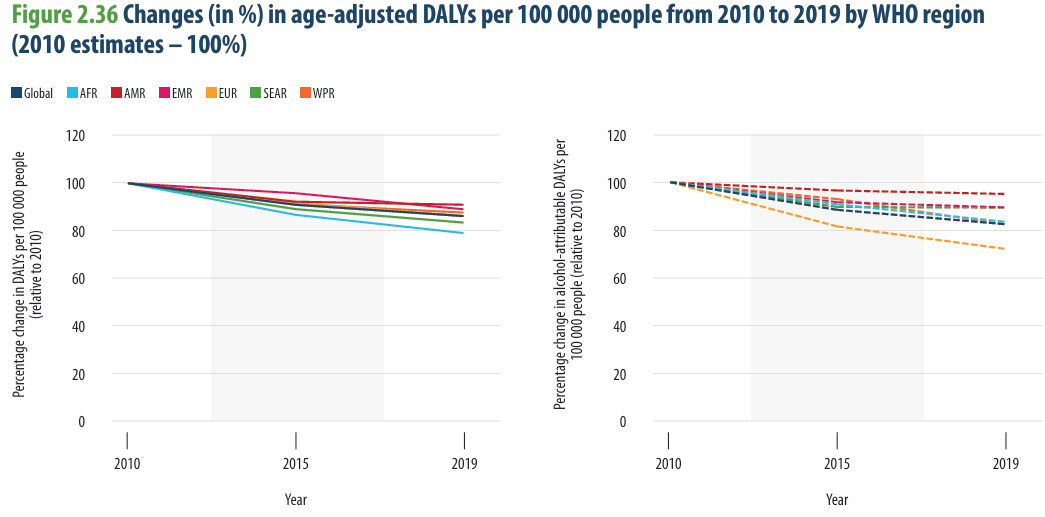
From 2010 to 2019, the number of deaths attributable to alcohol per 100 000 people decreased by 20.2% – greater than the overall decrease in total deaths worldwide for the same period of time (14.8%); similarly a decrease in the number of alcohol-attributable DALYs lost within the same period (18.3%) was larger than the observed decrease in all cause DALYs lost (14.0%).
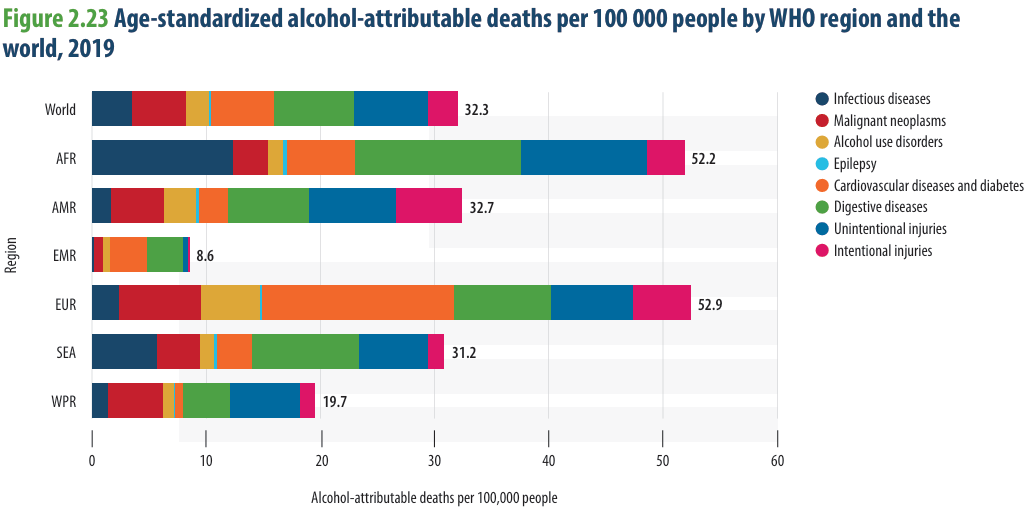
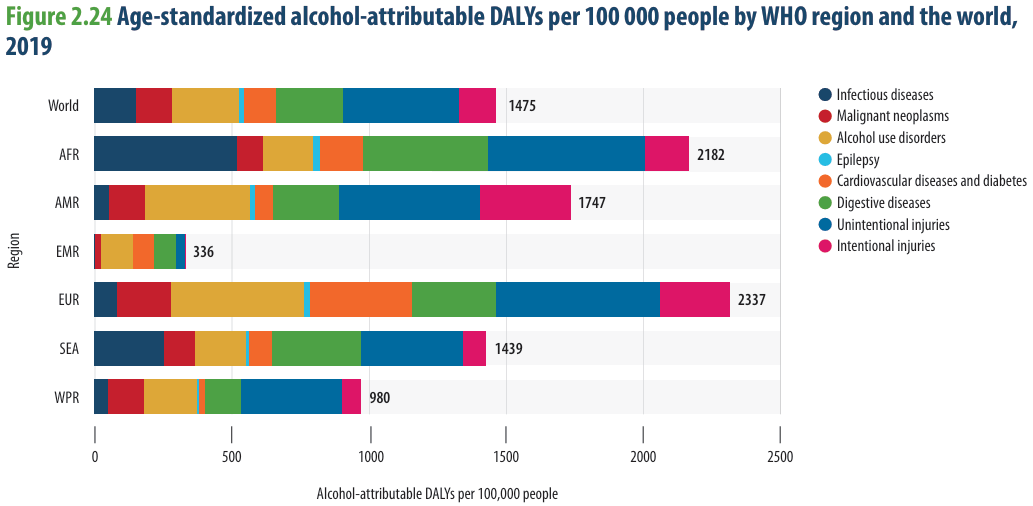
The age-standardized burden of disease and injury attributable to alcohol consumption varies across WHO regions . The age-standardized alcohol-attributable burden of disease and injury was highest in the WHO European Region (52.9 deaths and 2337 DALYs lost per 100 000 people), followed by the WHO African Region (52.2 deaths and 2182 DALYs lost per 100 000 people), and lowest in the WHO Eastern Mediterranean Region (8.6 deaths and 336 DALYs lost per 100 000 people).
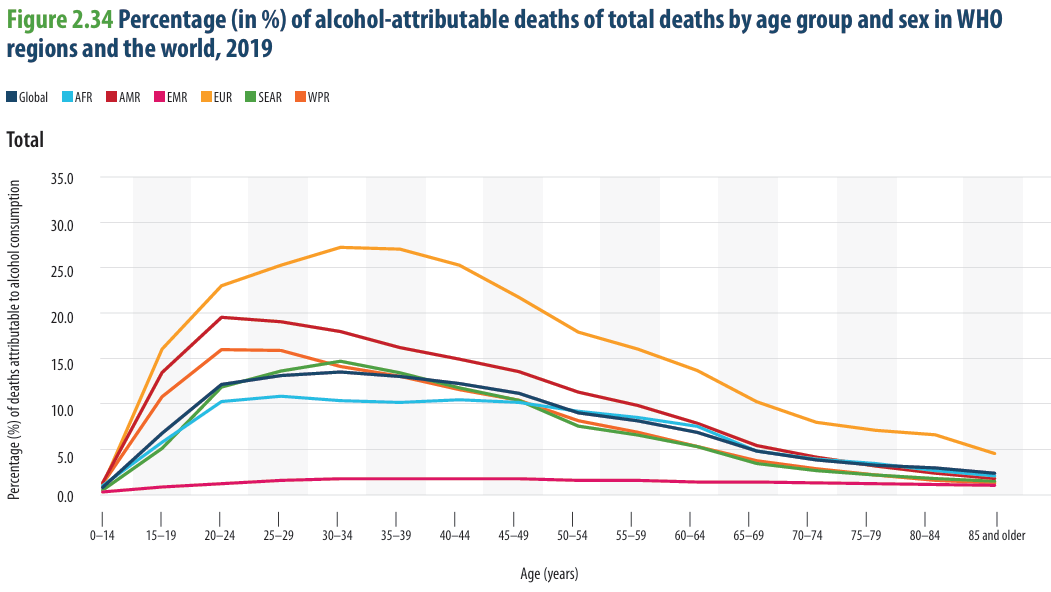
People of younger age are disproportionately affected by alcohol consumption with the highest proportion (13.0%) of alcohol-attributable deaths from all deaths in 2019 among persons of 20–39 years.
Global status and trends in alcohol consumption
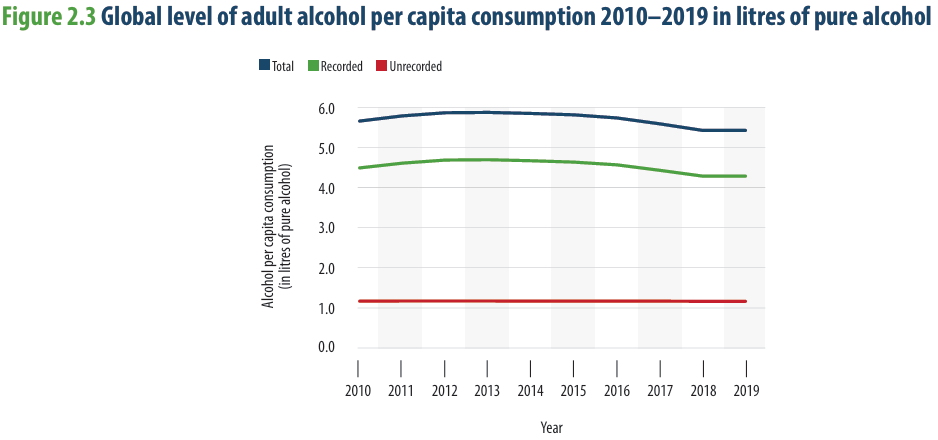
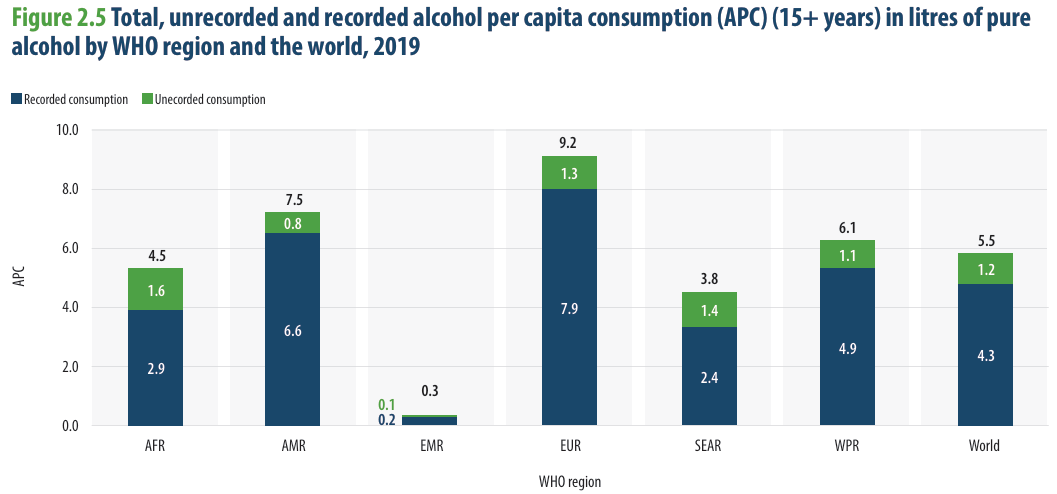
Total alcohol per capita consumption in the world population decreased slightly from 5.7 litres in 2010 to 5.5 litres in 2019 (relative reduction of 4.5%) with the highest levels of per capita consumption in 2019 in the WHO European Region (9.2 litres) and the Region of the Americas (7.5 litres)
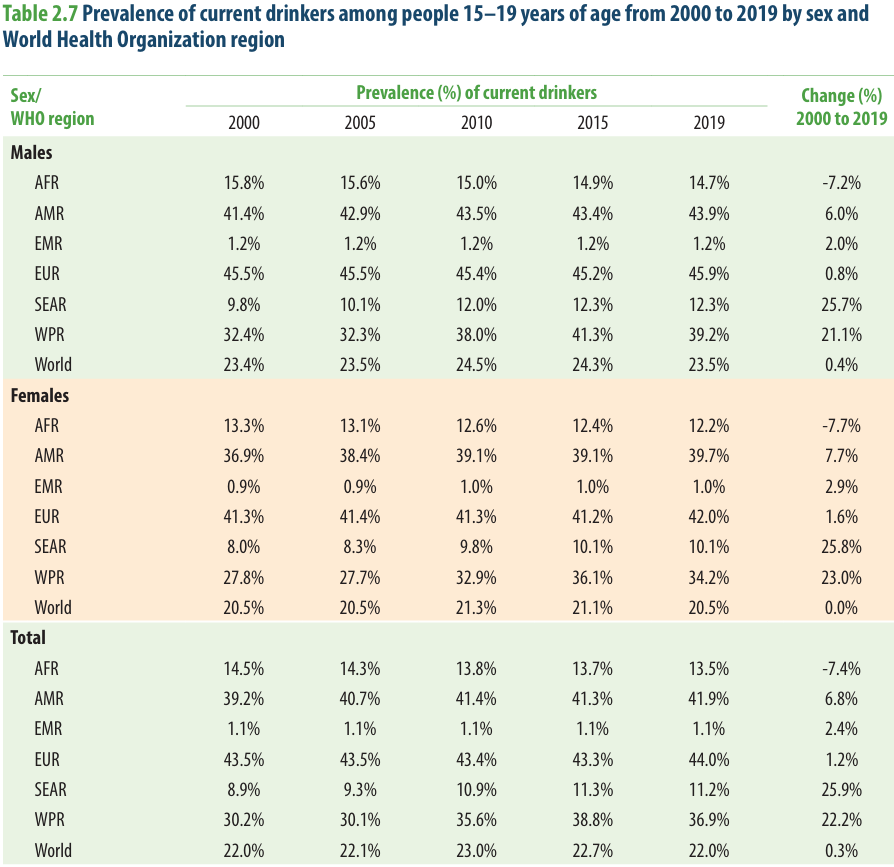
In 2019 the global prevalence of past-year drinking among those aged 15–19 years was 22.0% (23.5% among males and 20.5% among females 15–19 years of age). The prevalence of past-year drinkers among people 15–19 years of age ranged from 1.1% and 13.5% in the Eastern Mediterranean and African regions respectively, to 41.9% and 44.0% in the Americas and European regions respectively.
Treatment coverage or substance use disorders
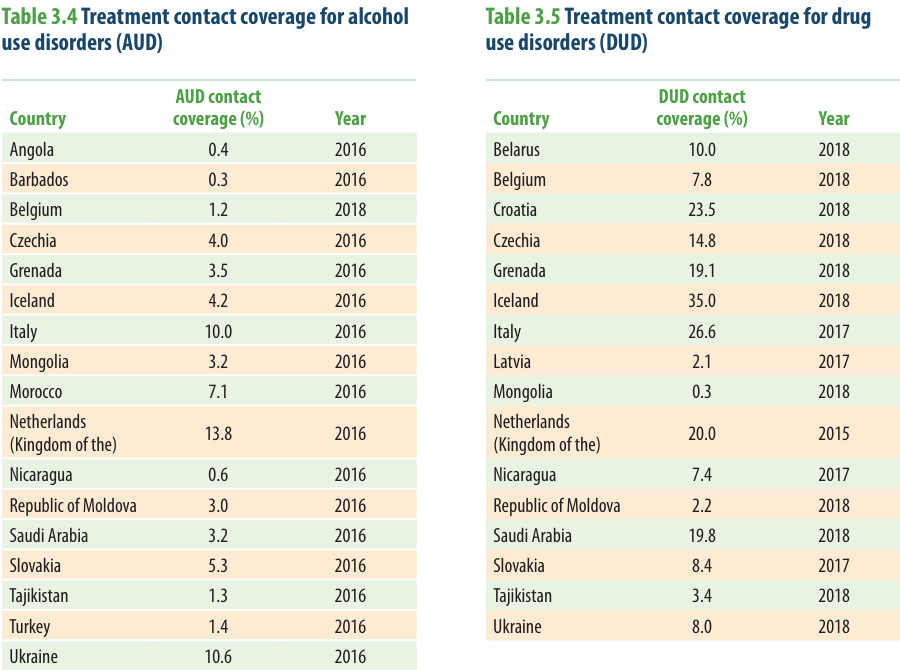
Although effective treatment options for substance use disorders exist, treatment coverage as estimated by different metrics is very low, and the proportion of people with substance use disorders in contact with treatment services varies from less than 1% to no more than 35% in all countries where such data are available.
Download:
Global status report on alcohol and health and treatment of substance use disorders